

Spot the marked picture#
Look for the picture that carries the Extra Pay marking. Say its name while the mark and picture are both in view. If the marking catches your eye first, trace it back to the tile before trying to interpret it. A colourful feature near a choice can be memorable long after you have forgotten exactly which drawing it belonged to. For neighbouring tiles, name the object on each side of the mark if necessary. This is an identification exercise you can perform before writing down anything about a possible return.
JILI describes a random increase to the multiplier. The practical question when a mark appears is which stake could benefit if the corresponding picture comes up. Suppose the rose carries the mark. Find the rose among your selections and see whether it has a stake on it. A mark on a picture you left empty is still visible information about the board, but it does not put a stake there for you.
Locate the feature marking#
Separate what you can say at this point from what you will learn later. You can say that the rose is marked, and you can read what you placed on it. You still need the one pattern revealed to know whether the two pictures coincide. Avoid writing “feature win” as soon as you see the mark. Leave room to add the result after it appears.
If a previous round also had a marking, keep it on its own line. A run of marked pictures in a personal note gives no timetable for another appearance. The picture history chart explains what a strip of past results records. For a claim that a particular picture is especially likely after a feature, read a picture probability claim alongside the evidence it gives.
Follow the reveal#
When the reveal arrives, identify the pattern before looking at the amounts. The sun and oil lamp each give light, but each occupies a different tile. A sun reveal settles the sun stake as a match. If the Extra Pay marking was on the lamp, it belongs with the other choice and cannot be moved onto the sun after the reveal. If your only view is a written description from another player, ask them to name the marked drawing separately. Their words “the light” could reasonably describe either of these pictures.
When the round settles, read the amount beside the matching picture. The multiplier describes how that stake is treated under the rules of the round. The overall amount you committed can include other pictures. Using that overall total as if it were all on the feature picture would give you the wrong starting figure for a calculation.
Read the multiplier beside the result#
Imagine the reverse of the first example. Keep a stake on the sun and lamp, but this time let the lamp appear while the lamp is marked. Now you have the three things needed to discuss a feature match together. There is a stake on the lamp, the marking belongs to the lamp and the lamp is the reveal. Consult the on-screen settlement for the amount.
If you are checking something after the board has moved on, record which of those details you still have. A screenshot of the final sun alone is enough for matching the revealed picture with a remembered choice. It leaves open the question of which tile carried a mark. Avoid assigning a feature multiplier to the result from memory when the marker was the detail you did not preserve.
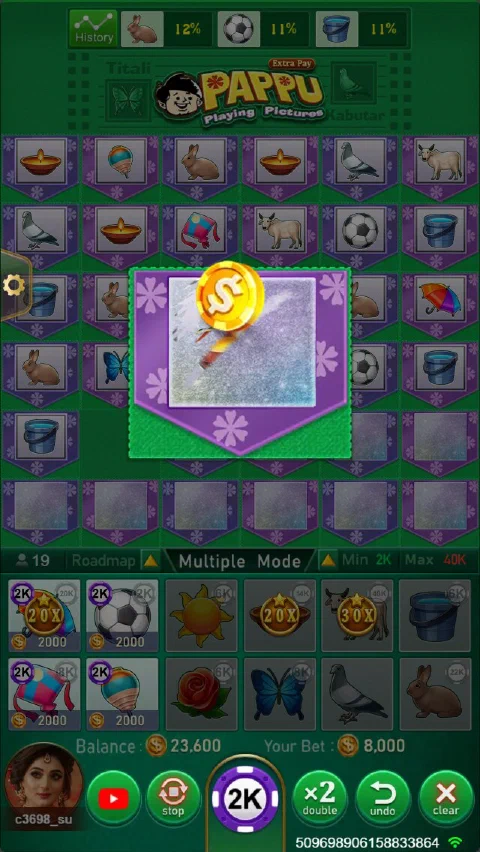
Trace the marking to its picture#
Give the feature its own place in a round note. For example, start a line with “selected kite”, add the amount you chose in the units the game shows, then add “mark on rabbit”. Leave the result space empty while you are waiting. Putting the mark beside the rabbit prevents you from reading it later as a promise attached to every chip elsewhere on the strip. For a very short note, use four column headings on paper. Choice, stake, marked picture and reveal will still be legible when there is more than one round on the sheet.
Suppose the kite then appears. You can now finish the line with “revealed kite”. It records a match on your chosen picture and a mark on a different drawing. A friend reading your note can now tell which picture carried the mark. Writing down only “Extra Pay appeared and my kite won” loses the information needed to relate the two facts.
Record feature, picture and reveal separately#
Where several choices have stakes, attach the amount to each choice in the note. Imagine two units on the rabbit and one on the kite. There are three units committed altogether. If the rabbit appears, the amount on the rabbit is the part to examine for a rabbit marking. The unit on the kite still contributes to the cost of the whole round.
Keep a separate place for the return displayed. If you did not see it, leave that part blank until you can read the relevant record. The amount committed and the name of a marked picture do not supply a fixed return on their own. When comparing your balance with the sum placed, the guide to settling a picture match starts from the matching stake and accounts for the other commitments.
Read an unmarked example first#
Start with a match where no feature is marked. Imagine putting one practice unit on the bucket. The bucket appears in the reveal, and there is no feature mark in the example. You can account for the match by following the picture alone. To see what the bucket paid, check the rule for a bucket match and the settled amount. You can identify the bucket without knowing what it paid. Keep the hypothetical examples in the same units throughout. Introducing rupees or a cash balance midway through a comparison would obscure the single change you are trying to examine.
Now replay the example on paper with the same stake and the same reveal, changing one detail. This time give the bucket the Extra Pay marking. Your selection still costs one practice unit and still matches the bucket. What can change is the multiplier on that matching stake. Comparing these two examples ties the feature to the correct amount without suggesting you can make it appear in play.
Compare one marked sample with an ordinary match#
For a third case, keep the bucket marked and imagine that the horned animal appears instead. If your only stake was on the bucket, the feature is attached to a picture that missed. Compare that case with the ordinary match. A result showing the picture you chose matters more to the settlement question than the mere presence of a mark somewhere on the board.
JILI also uses the feature name Extra Pay in Sic Bo. That game resolves a roll of three dice, while Pappu reveals one picture. A figure seen alongside a dice result would need its own rules and could not supply the missing multiplier for the bucket example. The comparison with JILI’s three-dice game explains how the object you read at the end of the round changes.