
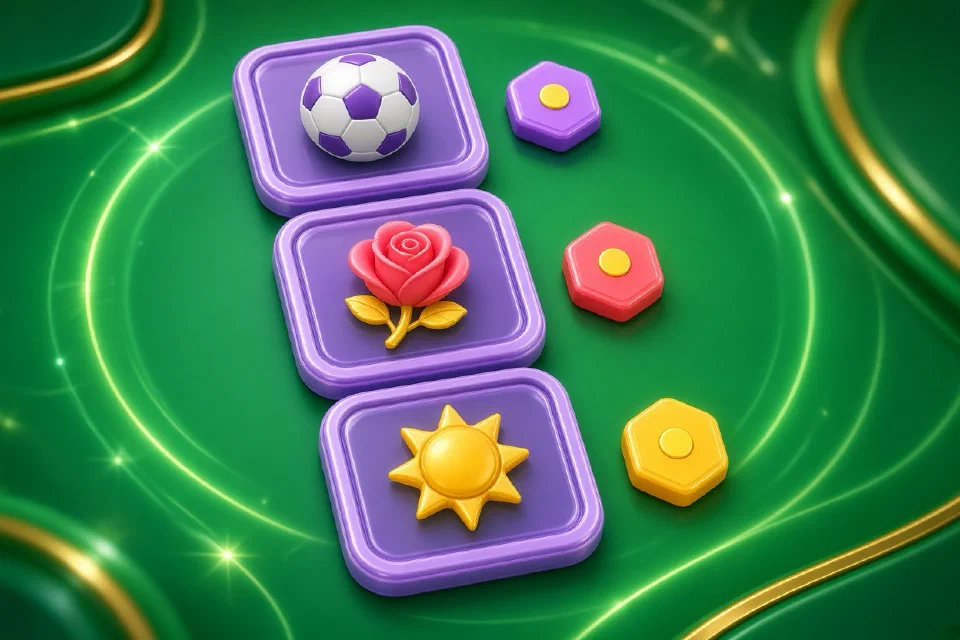
Choose a picture and a stake#
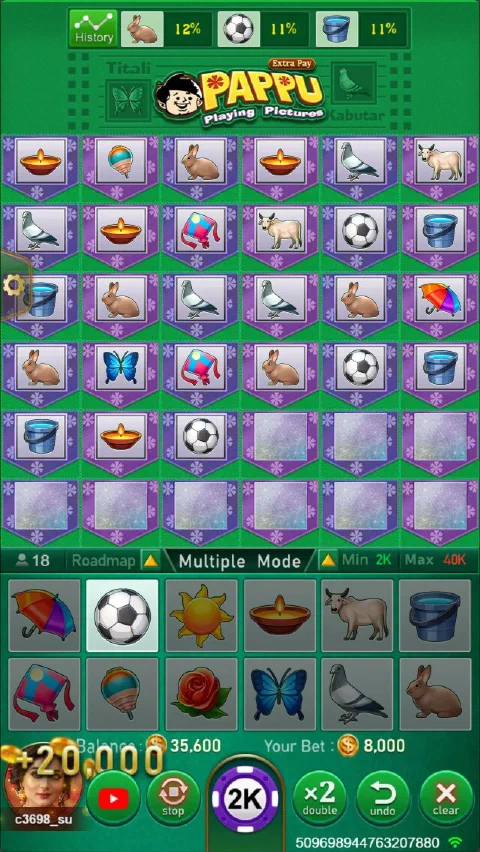
Start with the choice you can describe most easily. JILI shows two rows of six drawings. The umbrella sits at the start of the top row and the bucket at the other end. In the lower row, the kite and rabbit occupy those outside positions. Use the ends of the rows to orient yourself before placing anything on the board.
Choose an amount whose unit you understand. For a first run through on paper, one practice unit is enough. Use the board illustration below to find the pictures before trying the sequence on paper. A picture printed in a guide lets you identify where a selection would go even while you are learning away from an active game.
One picture and its stake#
Find the oil lamp in the upper row, between the sun and the horned animal. Suppose the lamp is your only choice and you put one practice unit on it. Say “one on the lamp”, then check both pieces of that statement. A chip amount you intended to use and a picture you meant to tap are still only intentions until you can read the selection back.
With one unit on a single picture, the total committed is one unit. If you read a different total, pause before accepting the choice. Look for an amount left on another picture or a different amount on the lamp. To check which button you used, compare the selection buttons with the labels on your board.
You may hear picture names in Hindi even when reading an English guide. Diya identifies the lamp. The illustrated names for chhatri, diya and patang are useful when a friend’s spoken instruction and the words in your own notes differ.
Compare the winning picture#
Wait for the result of the round you chose. Find the large revealed picture, then come back to your selected drawing in the strip. If both are lamps, you have a match. If the large picture is the butterfly, the lamp selection misses. You can check either answer by naming the drawings, before reading any amount returned.
The result has the same job even if the drawing also appears elsewhere on the screen. The lamp can remain among the twelve available choices after a different picture appears above. Seeing it in that row is expected. The result for comparison is the single picture revealed for the round.
Read the single winning pattern#
Imagine the large picture is the kite. Put a finger beside the kite in the illustration below, then find the amount you had on that choice in your example. If you had selected just the lamp, there is no stake on the kite to settle. Calling the kite the winning picture describes the game result. It takes a stake on that picture for it to be your match.
Several choices make this check a little longer. Read each choice on its own line and compare it with the same reveal. Leave a nonmatching amount in your total for the round, even after you have marked its picture as a miss. Removing that amount from the total would make the round look cheaper after the fact.
If you need to check a return, start with the stake beside the matching drawing and the terms shown for the session. The guide to matching the revealed picture follows that part of the process. First finish the simpler task of identifying exactly which choice, if any, matched.
Follow the four actions in order#
Four short actions keep a first round readable. Name the picture, read the amount on it, add up the total for the round, then check the reveal. Complete the first three while the choice is in front of you. You can leave the last field blank for as long as it takes to see the result.
Fold a sheet of paper over the result to practise reading a round. Write “spinning top” in the first space and “one practice unit” in the second. Work out the total without lifting the fold. Since only the top carries a unit, you can fill in the third field now.
A four-field round note#
Lift the fold and give the example a sun result. A complete note reads “spinning top, one practice unit, one unit total, sun revealed”. There is room for a verdict in the margin if you want one. In this case the top misses. Keeping the result name as well as that verdict helps you check your reasoning later.
If the picture appears before you have finished the note, record what the screen still shows. Suppose you remember considering both the top and the sun but can only see a sun in the reveal. You can now fill in the last field with confidence. Keep the first selection blank unless you can see which picture you backed.
When practising with a friend, swap completed notes and ask them to identify the match without seeing your original sketch. If the amount beside the picture is missing, they can still recognise the outcome but cannot tell how much was on it. Add the missing field before moving on.
Check a second example yourself#
Fold another sheet into two columns. Down the left write “umbrella” and “bucket”. Down the right give each a stake of one unit. At the bottom add the amounts and write two units committed. You have made two selections for one round. There will still be one space at the top of the page for the sample result.
Before looking at the answer, point to both drawings on the board. They are the outside pictures of the upper row. On a small screen, check each drawing before moving to the next. You can identify the drawing and check the stake attached to it without depending on a tiny printed name.
Circle the bucket on a two-row scorecard#
Use bucket as your sample result. Circle the bucket row, including its one unit. Put a small mark beside the umbrella to show that you checked it. Leave the two-unit total where it is. If somebody asks how much matched, the answer is one unit on the bucket. If they ask how much you committed, it is the two units at the foot of the sheet.
Change the sample result to rabbit and try the exercise again. Neither row gets a circle this time. You can change the outcome for a paper exercise without changing the choices you wrote first. Compare the two sheets to see why an identical outlay can produce different match records.
You can also move the umbrella unit to the bucket on a fresh sheet. The combined cost stays at two units, but only one picture now carries a stake. See Multiple Mode cost for a longer comparison. These exercises work with pencil and paper alone, and the units stand only for amounts committed.