
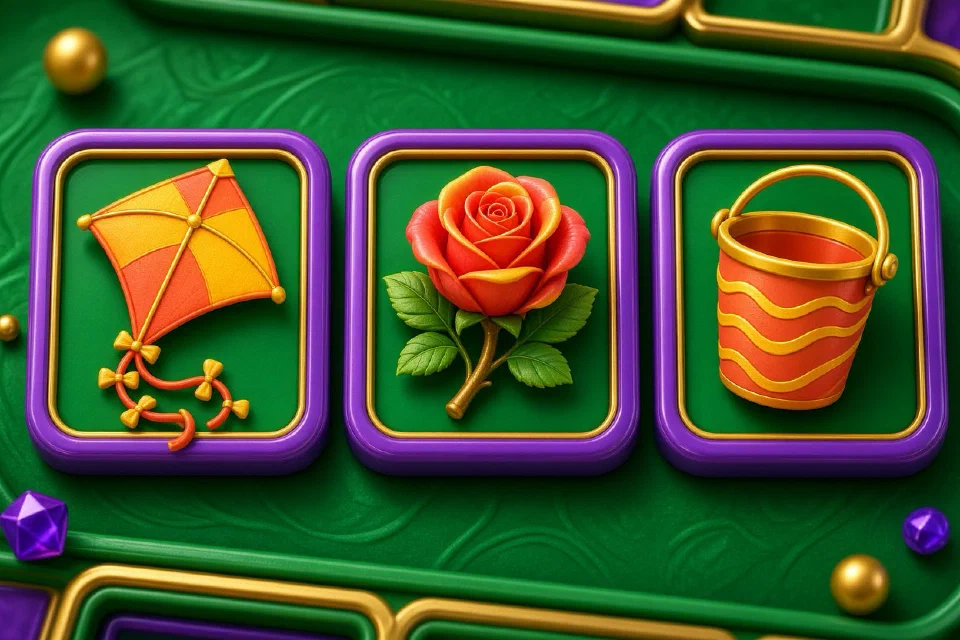
Trace two different selections#
Start a paper round by writing “umbrella” near the top of a sheet. Give it one unit. Write “kite” on a second line and give it a unit too. Leave a space to the right of both entries for the eventual result. These are two decisions about the same reveal, so keep them together under one round heading.
Read the two lines as instructions for finding the selections. The umbrella is at the start of the top row of the board and the kite begins the lower row. Check that both pictures you intend to back carry an amount. Looking at the drawing alone only tells you where the choice is.
Umbrella and kite at one unit each#
One unit beside each name gives two units committed. The word “each” does real work here. If you tell a friend you put “one unit on umbrella and kite”, they might think you divided a single unit between the pair. Saying “one on umbrella, one on kite, two in total” removes that ambiguity and makes the cost clear before the reveal.
Keep both lines when the round finishes. Imagine the umbrella appears. If you tear off the kite line because it missed, someone checking the sheet later will see one winning choice and a cost of one unit. Keeping the original pair preserves the amount you risked to cover those pictures.
To compare this with a single selection, use a fresh sheet for one unit on the umbrella alone. Both sheets would show a matching umbrella in this example. The sheets differ by the unit committed to the kite. A match count alone would hide that difference in spending.
Move from pictures to total cost#
Count the distinct names to find how many different reveals would match. Then read the amount beside each name if you want the price of that coverage. You can do the two jobs in either order, but keep the answers in separate spaces. Adding another unit to a picture already selected changes only one of them.
Try the sun and rose. Give each one unit at first. You now have two pictures and two units committed. Put another unit on the sun in your paper plan. The names on the page are exactly the same afterwards. The new total is three units because the sun line now carries two.
Two units on sun and one on rose#
If you begin with “two units on sun and one on rose”, copy the amounts as written. Counting the number of names would give two. Treating the two-unit amount as the stake for both names would give four. Neither reading fits the allocation. Touch each line once as you add its amount and you will reach three.
Compare that with one unit each on sun, rose and pigeon. Both plans commit three units. In the latter plan there is money on a third picture, while the sun carries only one unit. One plan covers the pigeon and the other does not. Both cost the same.
Before keeping an edited selection on the live board, read its total back against the one you calculated. For the labelled controls, see Undo, Again and Double. If a change leaves an amount somewhere you did not intend, pause while you check the board and your arithmetic.
Settle the single reveal#
Keep the two-unit sun and one-unit rose example in view. Write “rose” once above the rows as a sample reveal. Move down the list comparing each name with that one word. The sun misses. The rose matches. Check what the rule pays on the one unit beside the rose.
Make the mark around the whole rose line so that the one-unit amount remains attached to its picture. Circling the three-unit total instead suggests all three units qualified under the same result. The game has one revealed pattern, so distinct pictures cannot both be that pattern in a single round.
Circle only the matching row#
What if the sun had appeared? The layout would still have cost three units, but your mark would now surround the two-unit sun line. A bucket would leave both lines unmarked. Write those as alternative results in the margin of a practice sheet. Each example settles the same plan against a different reveal. Only one picture appears in a round.
To understand how a match pays, look up the terms for the matching stake on that board. Keep any displayed return separate from the original three-unit commitment. Finding a matching picture answers one question. Whether the amount returned covers your combined cost is a comparison you can make only when you have both amounts.
If your notes show a return and a total but omit which picture appeared, work from the round record before trying to reconstruct the allocation. Several choices can produce the same total. To check a round result, preserve the revealed name and the individual stakes while you can still see them.
Compare the plan with your cap#
Set a cap before you divide it between pictures. For a paper exercise, use two units as the most you are willing to commit in a round. Draw two empty boxes above your picture list. Assigning a unit uses a box. Once both are filled, you can move a unit between pictures on paper or set the whole exercise aside.
Suppose you begin with two units on the kite and then decide you would like to include the rose. To keep within two units, move one unit from the kite to the rose. Leaving both units on the kite and adding one on the rose makes three. The difference between “move” and “add” is easy to miss when your attention is on the new picture.
Fit two choices into a fixed cap#
Another way to test your cap is to write down what you would have left if none of the choices matched. If your plan assumed a win would fund one of the units already committed, you have included money you do not yet have. Count the complete outlay before considering any possible return. The Pappu round budget guide gives additional examples.
On a fresh sheet, try adding two units to a one-unit choice already in place. Three units would then sit on one picture. You have neither spread a two-unit cap across two pictures nor covered an additional outcome. Reading the revised plan in full catches both mistakes in a single pass.
The table below gives you three quick practice checks. Cover the sample reveal column and work out the cost yourself. Then uncover the last column and point to the one qualifying line, if there is one. You can finish the exercise without playing another round.
| Your paper choices | Total cost | Sample reveal |
|---|---|---|
| Kite, one unit | One unit | Kite matches that choice |
| Kite and rose, one unit each | Two units | Rose matches only its own row |
| Sun, two units, and rose, one unit | Three units | A bucket matches neither row |